
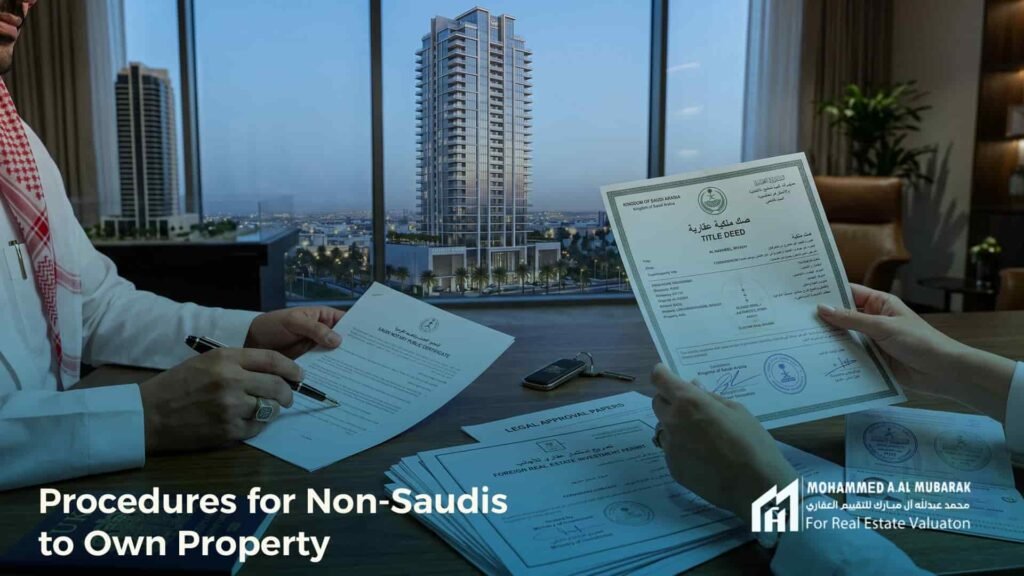
Saudi Arabia’s real estate sector has undergone significant regulatory developments in recent years, strengthening the market’s openness and increasing its attractiveness to both local and foreign investors. One of the most important developments has been the introduction of updated regulations governing Property Ownership for Non-Saudis, with the aim of attracting investment while maintaining the stability of the Saudi real estate market.
With the issuance of updated laws and implementing regulations, the discussion is no longer limited to whether non-Saudis are allowed to own property. Prospective buyers and investors must also understand the applicable conditions, required procedures, competent authorities, and the process of selecting a property that complies with Saudi regulations.
This guide explains the main provisions governing Property Ownership for Non-Saudis in Saudi Arabia and highlights the role of real estate valuation in protecting investors and supporting informed property decisions.
Are Non-Saudis Allowed to Own Property in Saudi Arabia?
Yes. Saudi regulations allow certain categories of non-Saudis to own real estate and acquire specific real rights over property, subject to approved conditions and geographical restrictions.
The categories that may be eligible for property ownership include:
- Individuals holding valid legal residency in Saudi Arabia, subject to the applicable requirements.
- Foreign investors who have obtained the licences required to conduct business activities.
- Foreign companies or Saudi-incorporated companies with non-Saudi shareholders, subject to the relevant regulations.
- Premium Residency holders.
- Diplomatic missions and international organisations, in accordance with applicable agreements and regulations.
Property ownership remains subject to the laws issued by the competent authorities, the controls approved by the Council of Ministers, and the relevant implementing regulations.
What Are the Conditions for Property Ownership for Non-Saudis?
The requirements may vary depending on the legal status of the buyer. However, the main conditions generally include the following:
1. Holding a Valid Legal Status
The applicant must be a legal resident, a licensed foreign investor, or a company operating in accordance with Saudi laws and regulations.
2. Compliance with the Permitted Purpose of Ownership
The intended use of the property must comply with the legally permitted purpose, whether for residential use, investment, or conducting an authorised commercial activity.
3. Compliance with Approved Geographical Zones
Saudi regulations determine the areas in which non-Saudis may own property. Certain cities and locations may be subject to additional controls, restrictions, or special conditions.
4. Completion of the Required Legal Procedures
The prospective owner must submit the necessary applications and documents and obtain all required approvals before the property ownership transfer can be completed.
What Documents Are Required for Property Ownership?
The required documents vary depending on whether the buyer is an individual, a company, or an investor.
Documents Required for Individuals
- A copy of a valid residency permit.
- A copy of the applicant’s passport.
- Proof of the national address.
- Financial documents when real estate financing is involved.
- Any additional documents requested by the competent authority according to the type of application.
Documents Required for Companies and Investors
- A valid commercial registration certificate.
- An investment licence.
- The company’s articles of association and statutory documents.
- Official authorisation for the legal representative.
- Documents relating to the property intended for purchase.
- Any approvals required for the company’s business activity or ownership purpose.
Procedures for Property Ownership for Non-Saudis
The property ownership process generally passes through several stages to ensure compliance with Saudi legal and regulatory requirements.
1. Selecting a Suitable Property
The buyer should verify that the property is located within an area where non-Saudi ownership is permitted.
The property must also comply with the relevant planning, licensing, and legal requirements. Buyers should review the title deed, permitted land use, property condition, and any registered rights or restrictions before proceeding.
2. Conducting a Real Estate Valuation
A professional real estate valuation is an important step before completing the purchase.
The valuation helps determine the property’s fair market value using recognised professional methods and current market evidence. It provides the buyer with an objective understanding of the property’s value before entering negotiations or making a financial commitment.
3. Submitting the Application and Required Documents
The applicant submits the ownership request through the approved official channels, along with the required documents, licences, and regulatory approvals.
Additional information may be requested depending on the applicant’s legal status, the type of property, its location, and the intended use.
4. Obtaining the Necessary Approvals
The competent authorities review the application to ensure that the ownership request complies with the relevant regulations and geographical restrictions.
The approval process may differ depending on whether the property is intended for residential, investment, or commercial purposes.
5. Documenting the Transaction and Transferring Ownership
Once the application has been approved and all requirements have been completed, the transaction is officially documented.
The property ownership is then transferred and registered in accordance with the real estate laws and registration procedures applicable in Saudi Arabia.
Are Certain Areas Subject to Special Property Ownership Regulations?
Yes. Certain areas are subject to special regulations regarding Property Ownership for Non-Saudis.
Makkah and Madinah are among the most notable areas where specific provisions, limitations, and exceptions may apply under the relevant laws and regulations.
For this reason, buyers and investors should verify the legal status of the property and the applicable geographical controls before beginning the purchase process.
Buyers should verify the applicable legal and regulatory requirements through the relevant official authorities. when the property is located in an area subject to special ownership requirements.
The Role of Real Estate Valuation in Property Purchases by Non-Saudis
Real estate valuation plays a significant role in supporting property ownership and investment decisions, particularly when the buyer is unfamiliar with local prices, market conditions, or valuation practices.
A professional valuation provides an independent assessment of the property and reduces reliance on asking prices or informal market estimates.
Determining the Property’s Fair Market Value
A valuation report helps identify the fair market value of the property based on its location, size, condition, permitted use, income potential, and comparable transactions.
This allows the buyer to understand whether the requested price is reasonable in relation to current market conditions.
Supporting Purchase Negotiations
An objective valuation gives the buyer stronger information when negotiating the purchase price.
It can also help identify significant differences between the seller’s asking price and the property’s estimated market value.
Supporting Investment Decisions
Investors can use the valuation report to assess whether the property aligns with their financial objectives.
The report may support the analysis of rental income, expected returns, operating costs, market demand, and potential future value.
Supporting Real Estate Financing
Banks and financing institutions may require a valuation report issued by an accredited valuation provider before approving real estate financing.
The report helps the financing institution determine the value of the property offered as security and assess the risks associated with the financing request.
Reducing Financial and Investment Risks
A professional valuation may identify factors that could affect the property’s current or future value.
These factors may include:
- The physical condition of the property.
- Location and accessibility.
- Permitted land use.
- Local supply and demand.
- Rental income and occupancy.
- Comparable property transactions.
- Market and development trends in the surrounding area.
Key Challenges Non-Saudis May Face When Purchasing Property
Although recent regulatory developments have created more opportunities, non-Saudi buyers may still face several challenges during the purchasing process.
Limited Awareness of Regulatory Updates
Real estate laws and implementing regulations may be updated or clarified over time. Buyers who do not follow these developments may rely on outdated information.
Difficulty Verifying the Property’s Legal Status
The buyer must verify the title deed, ownership information, permitted use, licences, restrictions, and any obligations attached to the property.
Differences in Property Prices Between Locations
Property values can vary significantly between cities, districts, streets, and even neighbouring properties.
These differences may be influenced by accessibility, infrastructure, development activity, services, demand, and future planning.
Selecting a Property That Does Not Match the Investment Objective
A property may be legally available for purchase but unsuitable for the buyer’s intended residential, commercial, or investment purpose.
The buyer should evaluate whether the property’s characteristics align with the intended use and expected return.
Relying on Unprofessional Market Estimates
Informal estimates may not accurately reflect the property’s market value.
Depending solely on advertisements, asking prices, or individual opinions can expose the buyer to overvaluation and weak investment decisions.
For these reasons, non-Saudi buyers are advised to work with qualified legal, financial, and real estate valuation professionals before completing a purchase.
How to Make a More Informed Property Purchase Decision
Before purchasing a property, a non-Saudi buyer should consider several practical steps:
- Confirm eligibility to own the intended type of property.
- Verify that the property is located within an approved ownership area.
- Review the property’s legal documents and title information.
- Confirm the permitted use of the land or building.
- Obtain an independent real estate valuation.
- Review financing requirements when applicable.
- Analyse expected income and operating costs for investment properties.
- Review the applicable legal and regulatory requirements through the relevant official authorities.
- Complete the ownership transfer only through approved official channels.
Following these steps can reduce risks and support a more transparent and informed purchase decision.
Frequently Asked Questions About Property Ownership for Non-Saudis
Can a Foreign Investor Own Property for a Commercial Activity?
Yes. A licensed foreign investor may be permitted to own the property required to conduct an authorised business activity, subject to the applicable investment and real estate regulations.
The ownership purpose must be connected to the licensed activity and comply with any additional requirements imposed by the competent authorities.
Can Premium Residency Holders Own Property in Saudi Arabia?
Premium Residency holders enjoy broader property ownership rights in accordance with the provisions regulating Premium Residency and the relevant Saudi real estate laws.
However, special geographical restrictions and property-specific requirements may still apply.
Can a Legal Resident Purchase Residential Property?
A legal resident may be eligible to purchase residential property according to the applicable regulations, approved locations, and required procedures.
Eligibility should be confirmed before entering into a binding purchase agreement.
Can a Company with Non-Saudi Shareholders Own Real Estate?
A Saudi-incorporated company with non-Saudi shareholders may be eligible to own real estate according to its licensed activities, corporate structure, and the applicable investment and ownership regulations.
Can Property Be Purchased Without a Real Estate Valuation?
A valuation may not be legally mandatory for every cash purchase. However, it remains one of the most important steps for understanding the property’s fair market value and making a well-informed decision.
A valuation may also be required when the purchase involves financing.
Does Property Location Affect Ownership Eligibility?
Yes. Ownership eligibility may depend on the geographical location of the property.
Certain cities, districts, or designated areas may be subject to specific controls or restrictions for non-Saudi owners.
Does a Real Estate Valuation Guarantee Future Investment Returns?
No. A valuation provides an estimate of value based on the available information and market conditions on the valuation date.
It does not guarantee future price increases, rental income, occupancy, or investment returns.
Conclusion
The updated framework for Property Ownership for Non-Saudis creates new opportunities for residents, foreign investors, companies, and Premium Residency holders seeking to enter the Saudi real estate market.
However, purchasing property requires more than confirming basic eligibility. Buyers must understand the applicable conditions, approved geographical zones, required documents, legal procedures, and financial implications of the transaction.
Real estate valuation is an essential part of this process because it provides an independent estimate of market value, strengthens negotiations, supports financing requirements, and helps reduce investment risks.
By verifying the property’s legal status, reviewing the applicable official requirements, and relying on an accredited valuation report, non-Saudi buyers can make more informed and reliable real estate decisions in Saudi Arabia.
Disclaimer
This article has been prepared based on laws, regulations, and information published by the competent Saudi government authorities, particularly the Real Estate General Authority (REGA) and the Law of Real Estate Ownership by Non-Saudis issued under Royal Decree No. M/14 dated 19/01/1447 AH.
The applicable requirements may vary depending on the buyer’s legal status, the property type, its location, and the intended purpose of ownership. Buyers should review the latest official regulations and verify the applicable requirements through the relevant authorities before completing any transaction.
References
- Law of Real Estate Ownership by Non-Saudis — Full Legal Text
- Saudi Real Estate Portal for Non-Saudi Property Ownership
- Real Estate General Authority — REGA